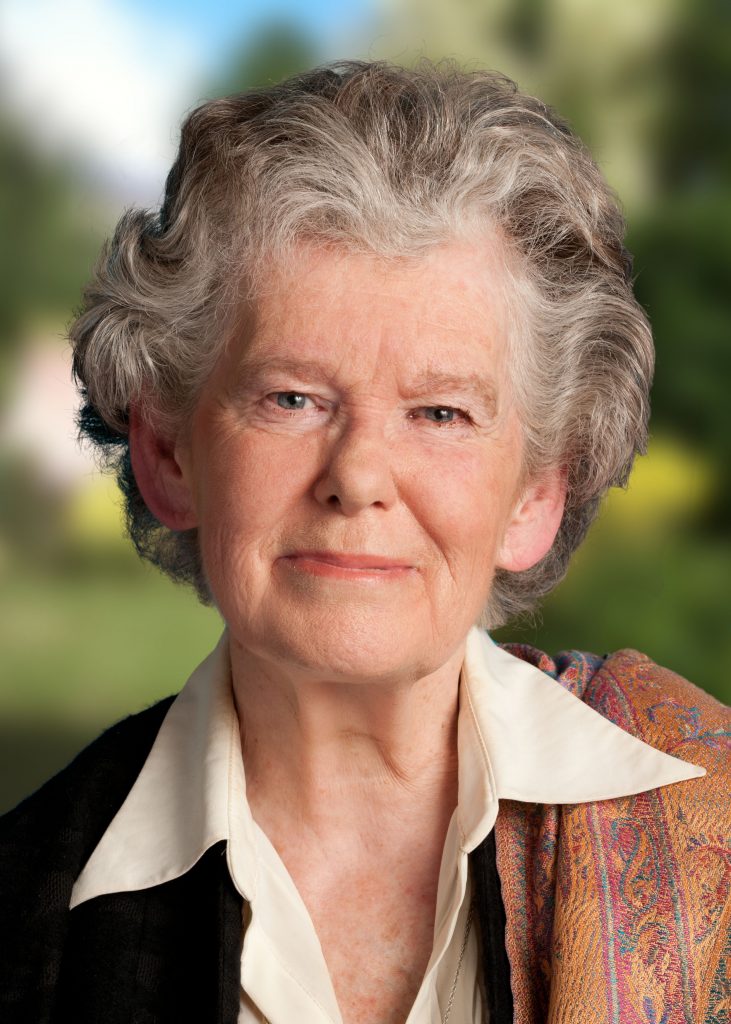

Strategic Leadership: An Exchange of Letters

February 24th, 2008

The article “Strategic Leadership: An Exchange of Letters,” by Gillian Stamp, Brian Burridge and Patrick Thomas, was published in the journal Leadership (2007; 3: 479-496).

Introduction:

“The initiative behind these letters arose in a meeting between two of the correspondents - Brian and Gillian. For many years they have both been interested in judgement in the decision-making of strategic leaders, and thought they might come to understand it more fully through an exchange of letters. The third correspondent, Patrick, also has a long-standing interest in, and has been a practitioner of, judgement in strategic leadership.”

Keywords: decision-making, judgement, phonesis, risk, strategic, sunesis

The publisher’s “Pay per Article” feature allows readers to access the full article for 1 day for US$15.00, via the following link:

http://dx.doi.org/10.1177/1742715007082967

Trust and Judgement in Decision-Making

March 11th, 2007

The thoughts in this article draw from the author’s work as a sounding-board for people with leadership responsibilities in the private and public sectors, with military and religious organisations, social enterprise and not-for-profit groups on five continents.

Fifteen hundred years ago, Saint Benedict wrote guidelines for people living and working together in the messy, disordered, unpredictable realm that is real life. These guidelines are traditionally referred to as “The Rule of Saint Benedict.” However,

The root meaning of the Latin and Greek words translated as “rule” is trellis. Saint Benedict was not promulgating rules for living; he was establishing a framework on which a life can grow. While a branch of a plant climbing a trellis cannot go in any direction it wants, you cannot know in advance just which way it will go. The plant is finding its own path, within a structure. The space in which it moves is open, though not without boundaries.[1]

In any organization not staffed entirely by robots, every individual working in that organization must exercise judgement, finding their own path within the structure of their work. Unlike past experience or previously-acquired knowledge, judgement is the decision-making capability that comes into play when we do not, and cannot, know what to do.

Because judgement is what we rely on in unfamiliar, volatile and ambiguous situations, the exercise of judgement is fraught with uncertainty. It is therefore the responsibility of leaders to build and maintain a framework, a trellis, that can support and cultivate confidence in the judgement of those who work to them, and crucially, confidence in their own judgement.

Such frameworks may not seem necessary when life is moving smoothly and problems are “tame”. A “tame problem” is one that may be complicated, but has likely occurred before – a combination of experience, knowledge and judgement can be applied to resolve it. “Wicked problems”, on the other hand, are the ill-defined, ill-structured, real-life decisions that have incomplete, contradictory and changing requirements.[2] In these situations, experience cannot inform and knowledge is incomplete. Therefore it is when we face wicked problems – when we do not and cannot know what to do – that we are forced to rely most upon our judgement.

The Trellis as Tripod

When people use their judgement they feel both exhilarated and unsure. Unsure because they cannot put into words what it is they are taking into account, and do not know that what they are doing will achieve the desired result – only time will tell.[3] Exhilarated because using judgement brings something of themselves to bear, something only they can bring.

People all over the world and at all levels in organisations describe a sense of well-being when their capacity for judgement matches the challenges they face. They speak of feeling energised, competent, confident in their capacity to make decisions. This sense of trust in their judgement is also called being “in flow.”[4]

Flow

By providing a framework for people to use their judgement wisely, leaders not only create conditions for the successful engagement with “wicked problems” faced by an organisation, they also enhance personal well-being in the members of that organisation.

One way to think of this trellis, this framework for enhancing confidence in judgement, is as a tripod which the leader builds from three complementary and equally vital activities: tasking, trusting and tending.

Tasking

Leaders are dependent on the good judgement of the people they lead, a dependence known as felt accountability. Delegating tasks to others gives rise to a constant tension between control and trust. Leaders manage this tension through tasking, a process that enables the leader to define the limits for judgement and establish criteria for review, by:

  • sharing intention
  • agreeing objectives and resources and
  • agreeing a completion time.

Prescriptive trust[5] refers to how far people are (and feel they are) trusted to obey the rules that limit their discretion. Leaders send signals about prescriptive trust through the way they design systems, processes and targets, and people respond by staying within the prescribed limits and applying their expertise and knowledge. The CEO of a global company describes tasking as “ensuring people understand the framework within which they have freedom to act.”

Where prescriptive trust is high, people see limits as external standards that give the relief of knowing when they have done well and what they can improve. Where prescriptive trust is depleted, there is a temptation for leaders to add rules, controls and measures, at considerable cost, yet often with limited gain in quality or value.

Trusting

Once tasking has established the objectives of the work, the second element of the tripod, trusting, comes into play. More specifically defined as discretionary trust, this refers to how far people are (and feel they are) trusted to use their own initiative and judgement in forwarding their work.

Leaders send signals about discretionary trust through shared values and purpose, and people respond by using their judgement in the light of those values. Depleted discretionary trust leads to decline in respect for observance of the prescriptive element of the work, and/or manipulation of measures and definitions – for example, reclassifying a trolley as a bed in order to meet a target for hospitals to get patients off trolleys and into beds within a certain number of hours.

People are very clear about the differences between prescriptive and discretionary trust – as one civil servant put it, “prescriptive trust is trust without space, and discretionary trust is trust with space.”

When he was head of the Prime Minister’s Delivery Unit, Michael Barber made the point that targets and prescription (tasking) are effective in lifting service and delivery from poor to mediocre, but that people need to be trusted to use their judgement if services are to go from mediocre to excellent.

Tending

The third element, tending, is the process of maintaining the balance of trust and control. Tending is the work that keeps things working, that keeps the organisation ”in flow.” It monitors without crowding, is vigilant in attending to both prescriptive and discretionary trust, and in continuously communicating a sense of purpose and relevance that enables people to use their judgement to make adjustments in specific cases on their own initiative. Throughout history, tending has been the work of slaves, women and great leaders.

Tending requires that a leader stay alert and responsive to constantly changing circumstances, but sometimes it can also benefit from actively changing those circumstances. The leader must have the courage to “nudge”. Nudging, or provoking change, requires courage because it adds to the prevailing uncertainty, and there is no guarantee that it will yield relevant information or comfortable knowledge.

One leader uses the image of a kaleidoscope to describe facing ambiguity that is dynamic rather than static,

where the variables are not only in constant motion, but continually change in their order of importance. This degree of ambiguity and chaos means not only that there is a need to stop this ever-varying kaleidoscope to try to identify patterns, but also that common interpretation between individuals is problematic. I often have the experience of looking down the kaleidoscope and seeking to see patterns that others simply cannot see. And sometimes I have to give the kaleidoscope a nudge to shift the pieces so as to develop a slightly new pattern. I then have to understand not only the power to nudge but also the journey through the pattern that I can turn into a roadmap for others.

Another leader takes the kaleidoscope image further:

For me the essence of the analogy is that the pattern is not static. I never look for the freeze-frame but rather the patterns created by the pieces in motion. Nudging helps me to gain some understanding of what is, and will continue to be, a dynamic environment by causing something dynamic to happen and thus testing my preconceptions. Nudging is important as it can provoke some of the shadows of surprises to reveal themselves, and sometimes that shadow of the surprise is all that is needed to create the mask, shadow or template for the nature of the beast that we are trying to see.

Balancing the Tripod

Tasking, trusting, tending. On the face of it, this sounds like common sense, and it is. But as one CEO put it, the tripod “sounds simple but is far from easy. The art lies in the appropriate balance of the three. I know that if I tell people both what to do and how to do it, they feel I don’t trust them either to stay within the framework we agreed or to use their judgement. Then we all lose out on that vital blend, the choice of which objectives to go for with the local know-how of how that can be achieved in their particular circumstances.”

On the other hand, too little specification of what to do can leave people uncertain. As another leader observed, “The last thing I want is to be ‘managerialist’ or for people to feel I am micromanaging, so I say as little as possible. But I do know that it means people are not only unsure, but even seem worried that they do not know what is expected of them. So they keep coming back to check and in the end we all get irritable.”

As a third leader said, “The whole point about the tripod is that it is dynamic. And so – using an engineering analogy – I can adjust the relative tensions, be alert to whether more tending is needed, or whether things in a particular department have got a bit loose, a bit vague, and could do with some clearer tasking. Or I reflect and realize someone is on too short a leash and needs to know they are trusted in a bit more space.”

Tripod

High and Low Trust

Leaders are aware that trusting the judgement of those who work to them can be a double-edged sword. The benefits of increased discretion can be lost if it is not exercised in the light of shared values and purpose.

As Geoff Mulgan points out, “Without trust it is impossible to delegate, and much of the business of government involves principals commissioning agents to do things for them, and then trying to track which promises have been kept and who has turned out to be trustworthy.”[6]

While felt accountability causes some leaders to see a policy of high trust in their people’s judgement as hazardous, low trust can be even more so. Low trust reduces the capacity to address “wicked problems” while increasing financial, transaction and human costs. This is because people who do not feel trusted are inclined to:

  • put their energy into suspicious watchfulness rather than productive work;
  • calculate costs and benefits carefully;
  • seek to minimize dependence on each other’s discretion by spinning webs of rules around each other;
  • suspect and invoke sanctions against ill will or default on obligations;
  • assume that failures or inadequacies result from negligence; and
  • distort communications
  • become rule-bound and lose their motivation to take responsibility
  • become passive and lose their creativity.

In short, people in a low-trust environment bring all the attendant costs of a win/lose, zero-sum approach to every encounter.

When wicked problems abound and trust is low, good leaders resist the temptation to:

  • prescribe ever more tightly by imposing rules and other forms of control through routines, targets and schedules;
  • assume that failures or inadequacies result from negligence;
  • increase inspection and control out of fear that such discretion as people do have will be used in their own interests rather than those of the organisation.

High trust, as well as creating conditions for engaging with wicked problems, controls financial, transaction and human costs. This is because people:

  • feel trusted to use their judgement in the interests of the organisation;
  • give each other the benefit of the doubt;
  • see inadequacies as honest misjudgements;
  • communicate freely and honestly;
  • offer spontaneous support without narrowly calculating the cost or anticipating any short-term reciprocation; and
  • resolve disagreements through problem-solving or working through.

Tasking, trusting and tending enable the leader to create a working atmosphere of high trust, in the confidence that this trust will not be abused, but will in fact pay significant dividends in the form of enhanced judgement throughout the organisation.

The Leader’s Tripod

A leader is a person who has an unusual degree of power to project on other people his or her shadow, his or her light. A leader is a person who has an unusual degree of power to create the conditions under which other people must live and move and have their being… a leader is a person who must take special responsibility for what’s going on inside him or herself…..lest the act of leadership create more harm than good.[7]

Because leaders use their judgement in ways that impact on many other people and institutions, they have a particular duty of care for their confidence in their own judgment – a responsibility to recognise when they are not “in flow”, and to take action to restore this balance for the benefit of the whole.

A leader overwhelmed by challenges first becomes perplexed, then worried and eventually anxious; his or her leadership becomes uneven, autocratic and dogmatic, or hesitant and weak. Alternatively, a leader underwhelmed by challenges may decide to use his or her “spare capacity” to lead and develop others, but may also become frustrated, apathetic or subversive, their leadership becoming inconsistent, confused and counterproductive.

Flow
One way for a leader to strengthen confidence in their own judgement is to use the three T’s of the tripod – tasking, trusting and tending – in relation to the self.

Tasking

Tasking the self is an important discipline, an expression of the ancient wisdom “know thyself” – strengths, vulnerabilities, graces and thirsts. In particularly difficult circumstances, leaders who find themselves out of flow are often tempted to choose shortcuts, diversions or substitutes over the exercise of genuine judgement. A vital element of tasking the self is becoming aware of such temptations in order to resist them.

Common temptations for leaders include:

  • treating a wicked problem as tame, or vice versa;
  • continuously gathering facts in the hope that there is some way of processing them that will decide the issue;
  • trying to freeze chaotic motion in order to reduce pace and variety and thus solving yesterday’s problems;
  • ignoring inconvenient facts;
  • denying uncomfortable knowledge;
  • relying on lessons learned in obsolete circumstances (“fatal baggage”) to deal with a new and unrelated situation;
  • allowing premature foreclosure.

Trusting

Trusting one’s inner resources is at the heart of being in flow. As a senior manager put it, “When you are in flow, you are confident. When you are out of flow, you become a searcher. You search everywhere and you cannot trust what comes to you. So you try to delay and avoid decisions.”

Just as the abovementioned temptations undermine judgement, there are other, more positive techniques leaders can use to listen more deeply in order to enhance their confidence in their own judgement:

  • Discern the situation. As one banker described it, “Discerning is seeing what might not be there, grasping and comprehending what is obscure, and deliberately navigating that shaded area between the view of things as expressed in models, and the infinitely more complex and changing world.”[8]
  • Attend to sparseness. In mathematics, sparse areas are those where there is little or no apparent connection between input and output. As one CEO with a mathematical background observed, where “there is a need to discern which inputs impact on which outputs and in what magnitude, it is not so much extrapolating between dots as choosing which dots are important to start with… One way of looking at sparseness is with an overexposed picture – lots of white but very little image. Before taking the picture, the image in the viewfinder was balanced and clear – however something was lost in the translation to the photographic paper. The detail is somewhere in the background but cannot be seen, however most people can recognize the image without a perfect exposure, and are able to establish the context reasonably accurately by letting their brain fill it in! Another way of turning the lack of information around is to imagine it was the sparseness that you focused on, by turning the image into a negative – the dark shadows would now be bright and white, and the familiar highlights would become dark and less prominent, and maybe we could see things differently.”
  • Make the most of surprise. Leaders cannot tell what will happen, but they are able to imagine what can. There is a significant difference between probability and possibility, a distinction originally made by the economist George Shackle.[9] While probability assumes a list of suggested outcomes that must be finite and known, possibility acknowledges the inherent uncertainty of wicked problems. Uncertainty need not necessarily be seen as risk – a leader who embraces the possibility of surprise will be stronger than one who tries to force knowability.

Tending

Tending the self is the core of living in and with turbulence, uncertainty, impermanence. This practice could be walking, listening to music, keeping pigeons or learning a new skill or sport.

But as soon as there are demands we are likely not to find the time for those activities that sustain us. Grappling with wicked problems, especially, can tempt us to deny the inevitability of uncertainty – we find ourselves dwelling in the past, fearing or even leaping to the future, rather than “being here now,” living in the “dimension of the present moment”[10] and accepting its transience.

Tending is so often neglected partly because, for the self it can so readily seem “selfish”, while tending others or a team, department or organisation does not seem like real work. As someone put it, “It’s like the plumbing - no one knows it’s there until it breaks down.”

The Neoplatonic philosopher Plotinus described the duty of care to tend the self: “Withdraw into yourself and look. And if you do not find yourself beautiful yet, act as does the creator of a statue that is to be made beautiful; he cuts away here, he smoothes there, he makes this line lighter, this other purer until a lovely face has grown upon his work. So do you also….never cease chiseling your statue.”[11]

Restoring Trust in Judgement

One leader who had come from outside to a top role in an organization quickly saw that not only was there a need to engage with several wicked problems, but also that many such problems were being addressed as if they were tame, and so apparent solutions were unraveling. He also saw a legacy of low discretionary trust, a decline in respect for observing prescribed limits, and manipulation of measures to meet targets.

As he reflected on how best to restore trust, he decided to give attention first to his immediate team on the premise that as they changed, so they would be able to restore trust for those who worked to them.

So where to start? Well, tasking and trusting will give me the ‘in’ to reinforce, extend and elaborate both on the boundaries and on the choices they can use to achieve what we all want… and we must shift the culture from blame to learning. So, if I make sure people are aware of the framework within which they have freedom to act, there will be clarity and evidence as the starting point for review rather than just vague expectations and that will feel fairer.

I will make a start by asking each member of my team what they need from me by way of time, approachability, working together to agree milestones, listening to their ideas when they disagree, reviewing in ways that motivate and help to learn.

I know the first steps must be small as I gradually increase their freedom to act so that each of them becomes more comfortable with using their initiative and then I can let further off the leash, and so on. But I also know that it is all too tempting to do something dramatic and in the present state of depleted trust, that might startle, but would not have the lasting effect the department needs.

So, must do the low key tending and keep systems, practices and people heading in the right direction at the right pace through what’s going to be a turbulent few months. If people feel tended they will be readier to learn and improve. And if this all works, we will be able to monitor activities without interfering, compare what we are doing with the best external standards, and keep a close eye on costs as well as on how we’re being perceived.

But I know this is not going to be easy; I’ll be tempted to tighten the framework if something seems to be too slow, or even not as I think it should be, and that will undermine the fragile emerging trust. Will need constant reminders….

Further Thoughts from Leaders

From a CEO of a global company based in Europe: “More and more I find that I can dismiss the numerous optimistic business models and NPV calculations in favour of the best view from the team not of all the upsides and synergies of a project but rather a list of the unknowns and downsides. My feeling is that we can be happy when synergies arrive but we can be out of business when a surprise from the sparse region of the unknown comes and kills a project….”

From the CEO of a British not-for-profit organsiation: “Thinking more about the temptations, I would be inclined to add the need to resist the temptation to pretend, consciously or sub-consciously, that actually ‘I am not the real leader. The minister is – the board is – all I can do is advise – the outcome is not my fault.’ And to resist focusing on problem definition or diagnosis as though progress can only be made when ‘the problem’ is accurately defined – and then defining it again and again because the diagnosis has not told you what to do – or because you can’t get everyone to agree with that diagnosis. And I would add to the temptation to deny uncomfortable knowledge that of not looking for/not asking for facts which one senses will be irritating and/or will get in the way.”

From a retired CEO of US-based global company, now a consultant: “One of the things I have found most helpful on complex projects (the things closest to wicked problems) was a team meal and a communal de-briefing at the end of day. Everyone from my CEO and the Exec VPs to the Assistant VP was given a very few minutes (and a safe space) to tell the group what they found most important, most troubling and what they most wanted those in other disciplines to know. This way we got terrific cross-pollination of ideas and a better collaboration on projects than the same people normally exhibited in their day jobs. It also spurred better creativity. Plus the ‘breaking of bread’ together is one of the most basic ways to form an adaptive community of trust – it triggers and responds to something in our social genes.”

Conclusion

While tame problems may sometimes be very complicated, they are nevertheless comfortingly resolvable. By contrast, if a wicked problem does have a solution, it is likely to be messy. It will resist analogies with problems dealt with in the past, so experience will give insufficient insight. It will confound analysis, so sheer deduction cannot show the way. Wicked problems demand the exercise of judgement, the deepest and most ineffable form of knowledge.

The Greeks had a word for it. Well, Aristotle did. He called this kind of judgement phronesis. Phronesis is the practical wisdom of what to do and how to do it, at the right time and with the right people, with the right mix of persuasion and challenge, and the right sense of what to leave unsaid and undone.

Organisations facing turbulence and uncertainty cannot survive without such “practical wisdom.” Given the proper trellis for support, trustworthy judgement, in both leaders and the people who work to them, will flourish and thrive.

© 2007 Gillian Stamp

References:

1. Henry, P. Benedict’s Dharma. New York: Riverhead, 2001.
2. Rittel, H., and M. Webber. “Dilemmas in a General Theory of Planning,” Policy Sciences, Vol. 4. Amsterdam: Elsevier Scientific Publishing Company, Inc., 1973.
3. Jaques. E. Creativity and Work. Madison, CT: International Universities Press, 1990
4. M. Csikszentmihalyi, The Psychology of Optimal Experience. New York: Harper and Row, 1990.
5. Fox, A., Beyond Contract: Work, Power and Trust Relations. London: Faber and Faber, 1974. See also E. Jaques, ibid.
6. Mulgan, G. Good and Bad Power. London: Allen Lane, 2006
7. Palmer, Parker J. Leading From Within. Indianapolis, IN: Indiana Office for Campus Ministry, 1990.
8. Caron, P. “Discernment Beyond The Church,” in The Way Supplement 85. Oxford: The Way Ignatian Book Service, 1996.
9. Frowen, S. F., ed. Unknowledge and Choice in Economics. New York: St. Martin’s Press, 1990
10. Holub, M. The Dimension of the Present Moment. London: Faber and Faber, 1990.
11. Plotinus. The Enneads. Translated by A.H. Armstrong. Cambridge: Harvard University Press, 1966.

Contexts for Change

November 28th, 2006

Leadership through change must provide meaning, encourage practical wisdom about how to do things differently in particular circumstances and build in review so that learning becomes the norm.

It may help to think about this in terms of an ‘unless/cannot’ framework of levels of work - unless certain conditions are provided by wider levels, change at any particular level cannot be fully achieved. One good reason for thinking in this way is that it indicates where to strengthen efforts when change runs into difficulty. A common response is to focus on what are perceived to be the ‘failures’ at a particular level, it is likely to be far more effective to look to what is not happening in the level that should be providing context.

Level 6 - unless leaders at level 6 propose and explain changes in the light of current and anticipated economic, social, political, technological influences, level 5 cannot define and describe a strategic intent for those changes and thus direction and values for the next decade.

Clear leadership at level 6 will sustain reputation so that it is the touchstone for all change. Everyone in the organisation will be clear about his or her role in protecting it and will be proud and confident to represent the organisation through the initial change and beyond.

Where leadership at level 6 is not clear, costs of change are likely to run out of control, reputation is at risk, change resisted, likely to be inconsistent and eventually to stall.

Level 5 - unless leaders at level 5 create a clear picture of the strategic intent for the next five to ten years and send an unequivocal message that there will be change, people working at level 4 cannot make appropriate decisions on what capabilities will be needed for the future and hence will not be able to develop appropriate strategies to bring them into being. Thus they will only take that action ‘too late’.

Clear leadership at level 5 will provide a sense of purpose for the change so that it will be understood and accepted and effective re costs, practices, systems and culture. There will be effective collaboration across departments/divisions, clients/customers, partners will hear clear, consistent messages and each person will know where his or her work fits in the new regime and will be confident that their contribution is valued.

Where leadership at level 5 is not clear, there will be complaints that “there is no vision”, people will keep their heads down assuming the change will go away and everyone will protect their own patch.

Level 4 - unless leadership at level 4 reviews the anticipated requirements over the next three to five years and decides on plans for strategic development of the organisation’s capabilities, then people working at level 3 cannot identify what best practice operating processes are going to be needed.

Clear leadership at level 4 will provide a sense of direction so change will be paced, will ensure budget discipline to minimize extravagance and waste and balance between efficiency and effectiveness, and between quality and cost.

If leadership at level 4 is not clear, people will complain that they do not know where they are heading, pacing will be too fast or too slow, costs to serve will be out of control.

Level 3 - unless leadership at level 3 provides systems, processes, standards and resources necessary to create current best practice over the next one to two years, then people working at level 2 cannot provide the leadership, planning and scheduling and information services needed by people at level 1.

Clear leadership at level 3 will provide a sense of fairness about change and the way it is being handled, people will be able and willing to enhance their professional/technical skills (especially important where part of change is to create more specialist roles). It will also ensure cost-effectiveness by ensuring the continuous work of ‘cleaning up’ waste and extravagance in Levels 1 and 2.

If leadership at level 3 is not clear, there will be resistance, loss of confidence and large numbers of grievances and appeals about the ways in which change is being handled. Costs are likely to increase while quality declines.

Level 2 - unless leadership at level 2 provides planning, scheduling and information for the year ahead, people working at level 1 cannot use their individual skills in different ways and remain efficient, do in-process problem-solving when processes are changing, identify waste in changed circumstances and control it whilst producing what the client/customer sees as good quality.

Clear leadership at level 2 ensures trust in the organisation as changes are made and signals that change is likely to be continuous rather than one-off. Leaders at this level are especially valuable and vulnerable because they are in pole position to build or weaken trust as staff, customers, clients experience change in particular situations that impact them directly.

Clear leadership at this level holds two key balances: one is between best possible response to each customer, employee, supplier and the cost of that response (costs to serve), the other is between work as it needs to continue and changes in working processes and/or conditions.

If leadership at level 2 is not clear, people working at level 1 will feel their contribution is not valued and their needs not attended to; waste will not be controlled, costs and absenteeism will rise.

© 2006 Gillian Stamp

Perspective on the World

October 10th, 2006

by Gillian Stamp

Author’s Note: This piece started out as a note written for a university student who was depressed and struggling, to offer her a way of thinking about what she was going through. It was later reworked for a more general audience, offering readers twice her age or more a perspective for reflection on their own experiences…

Most of us think of intelligence as something that can be measured by grades and IQ. We absorb information and skills at school, or receive training in the workplace, and accept an idea of intelligence defined by our grasp of an established knowledge-base which can be taught, memorised and relied on.

But there is another element to intelligence, one harder to quantify than a score on a test. It is our perspective on the world.

We each have our own way of seeing, of reaching out into life and making sense of it. Perspective is not just about gathering facts. It’s about how we figure out what to do when we can’t find the facts to help us make a decision. Or when facts contradict each other. Or, more painfully, when others contradict us. Perspective informs the ways in which we connect with the world and the people around us.

Curiosity

We each reach out to extend our curiosity in different ways. Some of us are most at ease with the familiar. Some enjoy finding out more about a particular area. Others widen their searches like ripples on a pond. Still others reach into unexpected, apparently irrelevant corners to seek for what might be there now, or for what might emerge.

Imagine this as tuning our antennae to pick up different signals – some close and clear, some more distant and indistinct, some faint, barely discernible.

Complexity

And once we have reached out, we perceive different connections, potentials, links, variables, possibilities – the raw material for making sense of the world. Some of us seek every possible angle on a situation we are interested in, or a problem we are trying to resolve, so that we can decide which techniques and knowledge will suit it best. Others seek for the connections and principles that link a number of situations or events together. Others revel in seeking patterns where none are obvious, and working out the rules that govern them. And some of us deliberately seek out uncertainty – by reading odd and seemingly irrelevant material, by walking down unfamiliar streets, or putting ourselves in new or challenging situations, we may welcome uncertainty itself as a resource.

Differences

When we talk about what we seek, see and understand – when we integrate our sight and insight – it soon becomes clear that others may not see the world that way at all. Friends, colleagues, teachers, bosses or parents may find what we are trying to describe, and the questions we ask, a bit odd. They might call us awkward, even impertinent, or tell us we could not possibly see things in that way because we have not had enough experience.

Seeing possibilities and potential connections that others are not aware of can leave us feeling lonely. We might even feel that there is something wrong with us. In school or university, the questions we ask may be brushed aside, or seen as challenging authority. At work, we may be asked to do X, and when we reply that makes no sense unless one also considers P and Q, and possibly E and F as well, we are told we do not have the experience to make such suggestions, and to get on with it.

It can be difficult to know how to respond – we tend either to become overly insistent and risk being seen as arrogant, or to retreat and keep our perspective to ourselves. In either case, frustration and alienation can follow.

Flow

We thrive when the challenges of the world in which we work, learn and live draw fully on the perspective we bring. We flourish when these challenges are diverse enough for our curiosity, complex enough for the connections we want to make, broad enough for the potentials we want to imagine. People all over the world describe feeling confident, competent, energised, even exhilarated when coping successfully with new challenges. Psychologist and author Mihaly Csikszentmihalyi defines this phenomenon as being ‘in flow’. We’re going with the grain, and things just seem to happen right of their own accord. Our intuition is there for us, and if there are choices to make, we make them almost without being aware.

However, when our challenges are insufficient for the perspective we bring, we feel frustrated, switched off. We grow anxious, hesitant, low on confidence. We lose touch with our intuition, and if there are choices to be made, they seem obvious and self-evident, tedious and demoralizing. A ‘challenge’ that requires no judgement is no challenge – and no fun.

If the challenges are overwhelming, on the other hand, we experience a different kind of anxiety. At first we feel perplexed, and have to coax our intuition. If overwhelm increases, worry takes over. We lose our ability to navigate through complexity, and are forced to gamble rather than make coherent choices. We long for the comfort of our intuition, yet we fear it will let us down.

Growing Perspectives

People seek ‘flow’ because it is a reward in itself. The feeling of being in flow gives us energy and confidence, which feed accomplishment, which in turn boosts energy, in a cycle of positive reinforcement.

Flow is not a luxury, but a staple of life. It inspires us to grow, since we seek the pleasure of being in flow as often as possible, yet as our perspective widens, we can achieve it only by tackling bigger challenges. It often feels as if our growing perspective has a life of its own as it seeks ever-farther horizons.

By seeking out associates and activities that challenge us in a positive sense – neither so much that we despair, nor so little that we doze off – we pave the way for a fulfilling, dynamic life, with opportunities each day to give the best in us, and receive the best in return.

© 2006 Gillian Stamp

The Four Journeys of the Leader

August 5th, 2006

by Gillian Stamp

“A leader is a person who has an unusual degree of power to project onto other people his or her shadow or his or her light… A leader is a person who must take special responsibility for what is going on inside him or herself, lest the act of leadership create more harm than good.” – Parker J. Palmer

This way of thinking about leadership places emphasis on reflectiveness, understanding the self and the ‘being’ of the leader, as a complement to skills and techniques for the ‘doing’ of leadership.

A helpful framework for holding the two together is the idea that each one of us is on four journeys through our lives, and that people with responsibility for leadership need to be particularly aware of each journey and the work of keeping them in balance.

The underlying journey is the journey of the self – the events through which we insert ourselves into the world as well the as events that unfold around us; where we are born, grow up, study, work; the people with whom we live in childhood and adulthood.

Reflecting on the journey of the self helps each of us to hear our own story, to see things differently from the way they seemed at the time, to understand more of the experience and to see what we have learned. The particular responsibility for leaders is to deepen their understanding of their own strengths and vulnerabilities, and to become more aware of the stories of those they lead.

An important element in the journey of the self is our ’capability‘ as it unfolds over time. Capability is how we use our judgement when we do not – and cannot – know what to do, how we ‘get our head around’ the complexities and volatilities of a challenge.

A match between capability and challenge gives the individual a sense of being ‘in flow’ – confident, competent, enthusiastic. When the individual is ‘in flow’, the organization gains the power of robust and resilient decisions.

Research has shown that capability grows over time. As individuals we all do our best to ‘go with the grain’ of that growth, to find challenges that stretch but do not over- or underwhelm us, that are just right for us at each stage of our growth. A leader is responsible for combining and pacing those individual patterns of growth for the good of the organization as a whole.

Leaders also have a special responsibility to reflect on the growth of their own capability – their own readiness for the complexities and uncertainties of the leadership role. The role may have come a little too early, or perhaps they have been waiting for it for a while and find disillusion creeping in.

Our research suggests that when leaders are not ‘in flow’, they – like anybody else – will not be able to make sense of the ambiguities, interconnections and unpredictabilities of their work, and so will struggle to make robust decisions. And – this is a key leadership element – they will be far less able to provide the conditions in which others can use their judgement wisely to sustain the resilience of the organisation. Capability, as the necessary but not sufficient condition for effective leadership, is of the essence in volatile, complex conditions.

The second journey is the public journey at work, in which our capability is expressed and affirmed – or not. It is in this journey that leadership is expressed and responsibilities are clear.

A dilemma all leaders face is the need to hold a balance between delivering value and controlling costs on the one hand, and sustaining high-quality relationships with people (customers, employees, partners, suppliers, communities) on the other. As with all dilemmas, the temptation is to address one or the other, or one after the other. Leadership holds the ‘and’ of quantity and quality in the face of pressures and change.

In times of rapid change, the public journey makes heavy demands on everyone. Leaders often find that the demands on time, responsiveness and presence can overwhelm to the point where this journey seems like the only one. It is in precisely those circumstances that leaders need to be mindful of the importance of the other three journeys, for themselves and for those they lead.

Everyone will have experiences of being over- or under-stretched by the challenges of their role, and of the effect of this discrepancy on their feelings and their decision-making. A leader may have considerable experience early in his or her working life of longing for more challenge, for more complexities and interconnections to navigate. Some people, faced with this, become impatient and try to rush changes; others seek ways to offer their capacity to see a wider and more nuanced picture, in support of those with whom they work.

When the public journey and the journey of the self are in balance, we are ‘in flow’. A leader must not only seek that experience for him or herself, but also take responsibility to provide conditions for others to be ‘in flow’.

The private journey is shared with family, friends, and a community, and in it we are very close to others’ journeys.

In many marriages and partnerships, both have public journeys, with all that means for expressing and affirming capability, for pressure on time, for managing two careers in addition to a household. And it seems often to happen that one partner may take on a more senior leadership role around the time when adolescent children need more time and understanding, or when parents become frail and require more care.

There has been a significant change in the nature of this journey in recent years. For many years it has been common for one partner to have a ‘more important’ public journey – a leadership role – and the other to see their role, in part, as providing support for it. So the first partner would not have been expected to buy milk on the way home, make the supper or put children to bed. For leaders this change adds to the expectations on them – and to the depth of their relationships with their children – not to mention requiring an additional understanding of the balancing of journeys of the people they lead.

The private journey is our ‘habitat’ – all that belongs to the place we leave and return to as we set out on our public journey. Pressure on this journey comes from a demanding public journey, from growth in capability not yet appreciated by those we work with, from knowing we are ‘out of our depth’ but have not yet been able to acknowledge it.

And it is easy to feel burdened by, and/or a burden to, those with whom we share this journey. It can seem as if there is no place in our life where nothing is expected of us.

When we feel guilty about neglecting the private journey, we often retreat from it rather than trying to weave it into the other journeys. There may still be a sense that this is acceptable for leaders, and to an extent that has to be true. But even if the leader and his or her partner make the choice to sacrifice the private for the sake of the public journey, many of those led will either choose not to, or will not be able to. The leader has to carry the responsibility for resourcing, carrying projects forward, and meeting emergency demands, while being understanding and patient about the ’life style choices’ of others.

A way of reflecting on the balance between the private and public journeys is to pause and learn from where one has chosen not to be.

The fourth journey is personal. It is the journey through which we do, or do not, care for ourselves and weave together the other journeys. It is about finding the ‘grain’ of the self and learning how to go with it.

This journey may be expressed in running, listening to music, making models, cooking, orienteering, sailing. Its essence is time and space for ourselves and for reflection – whether it be momentary or more focused. Some people give very little time or attention to their personal journeys until they face a crisis. But this is the journey to ensure that your self does not disappear.

The personal journey puts us in touch with our inner resources – with that judgement that allows us to make a wise decision when we do not and cannot know what to do. It may do so fleetingly, or we may choose to become more aware of that ‘answering activity,’ the ‘knowing that can see forwards and backwards, and in a flash give form to the confusions and chaos of everyday living.’

For a leader this journey is a ‘duty of care’ – for the light and shadows of the self, and thus for others.

There are three important elements to the personal journey:

  • Developing and deepening reflectiveness – pausing to consider the way we approach things; thinking about the way we think; about the way we respond to change; how we give meaning to things, decide what is a challenge, what an impossible demand, which game is ‘worth the candle.’
  • Ensuring that understanding of the self through reflection is complemented by how we are seen by others – as Robert Burns put it, ‘O would some Power the giftie gie us to see oursels as others see us.’
  • Making sure there is some one person, or some people, the leader can count on to ‘tell it like it is.’ Leaders can all too easily become cut off from honest feedback free of agendas. The greater the power and uncertainty, the more critical is this responsibility.

The personal journey supports the underlying journey of the self by helping us to free ourselves from the idea that our conscious thoughts and endeavors are all there is. It helps us to be in touch with – to trust and hand over to – our inner resources. This comes more easily when we are ‘in flow’. When we are either under- or overwhelmed by challenges, we become estranged from those inner resources. It is a particular responsibility of the leader in volatile, turbulent circumstances to stay in touch with inner resource as the core of sound judgement essential for his or her public journey.

Each of us seeks to be ‘in flow’ for the well-being it brings – not least in physical health. A leader has an extra responsibility to learn how to recognise when he or she is out of ‘flow’, and how to regain it – for the well-being of the people led, and of the organisation as a whole.

© 2006 Gillian Stamp